
A change of religion today is often seen as a personal decision. In the past, it meant much more. It was a profound social, cultural, and sometimes even legal transformation. That is why, in genealogy, a change of faith can be a real challenge. Suddenly, ancestors “disappear” from the records of one parish and appear in another. Sometimes the language of the records changes. Sometimes the form of the surname. Sometimes even the given name.
A change of religion could result from love, social pressure, a mixed marriage, migration, or personal beliefs. But it almost always meant entering a new reality and leaving traces in the archives that today we must learn how to find and interpret.
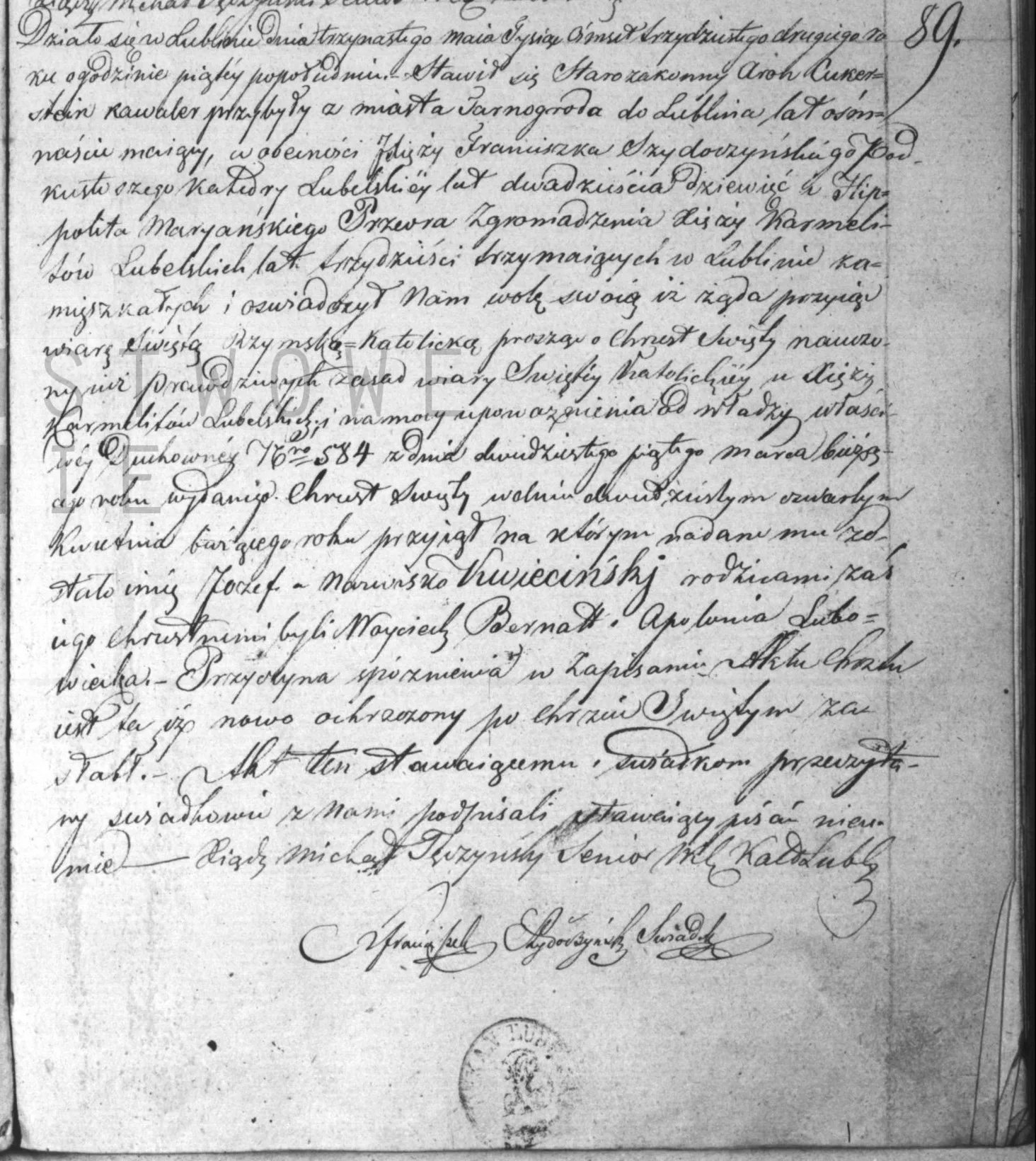
Below is an excerpt from a baptism record written in the parish of St. John in Lublin in 1832:
There appeared the Old Believer (Jew) Aron Cukerstein, an unmarried man, who had come from the town of Tarnogród to Lublin, aged eighteen […] and declared his will that he wished to accept the Holy Roman Catholic faith, requesting Holy Baptism, having already been instructed in the true principles of the Holy Catholic faith by the Carmelite priests of Lublin; and by virtue of the authorization of the competent ecclesiastical authority no. 584 issued on March 25 of the current year. He received Holy Baptism on April 24 of the current year, at which he was given the name Józef and the surname Kwieciński; his godparents were Wojciech Bernat and Apolonia Lubowiecka. The reason for the delay in recording the baptismal act is that the newly baptized fell ill after receiving Holy Baptism.
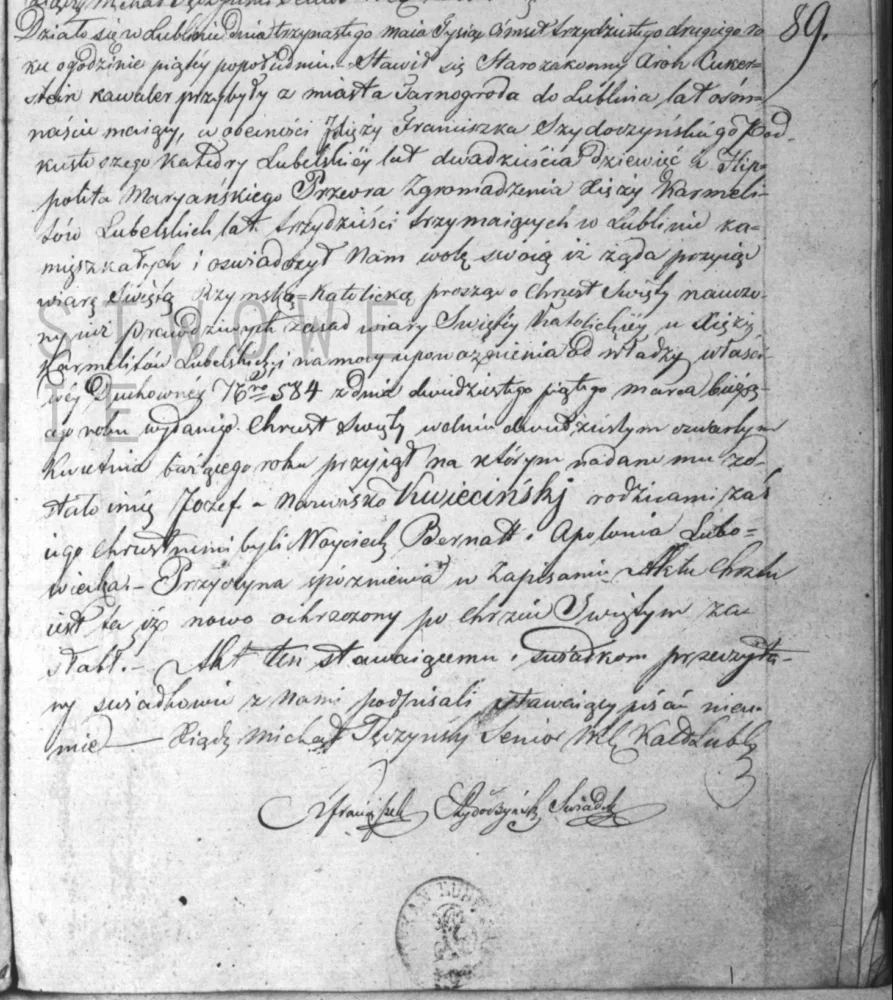
Józef Kwieciński (formerly Aron Cukerstein), record no. 89/1832, parish of Lublin (St. John), online source: Szukaj w Archiwach.
For a genealogist, this is a breakthrough document – without it, this person cannot be connected to an earlier generation. It also contains everything that makes research difficult: a change of first name, a change of surname, and a break in the continuity of records. What are we missing? The most important thing—the names of Aron’s parents. We know that he came from Tarnogród and that he was born around 1814; however, Jewish records from that place and period have either not survived or are not available online. In the Lubgens database, not a single person with the surname Cukerstein appears, and the same is true for Geneteka. FamilySearch does show individuals with that surname, but they are mostly emigrants from Eastern Europe who settled in the United States. And this raises the question: what really happened to Józef Kwieciński?
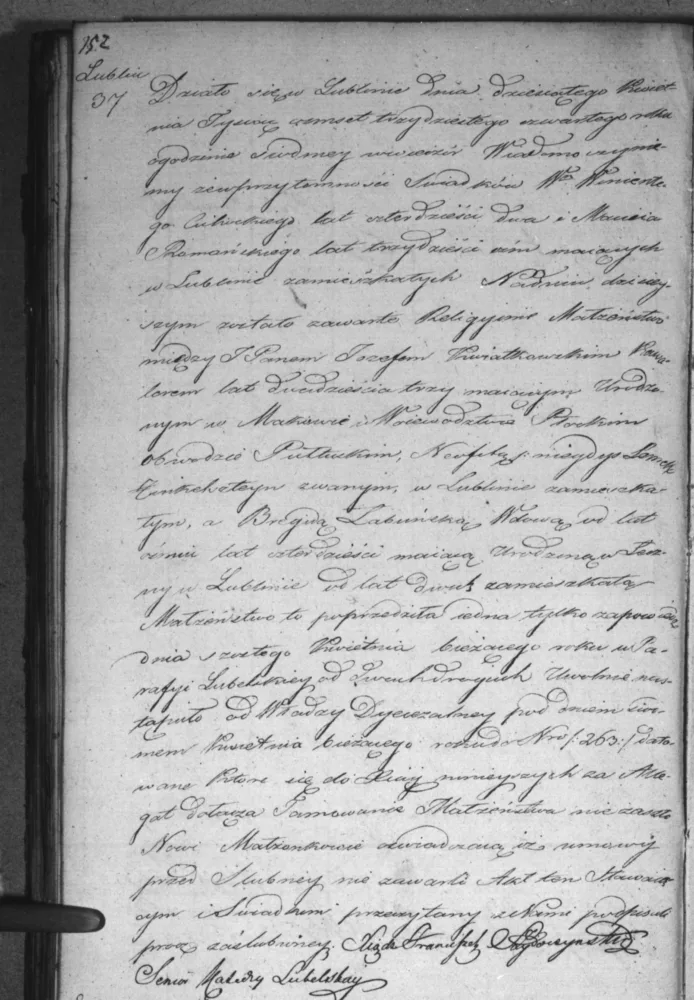
In search of his later life, I turn to the parish of St. John in Lublin and find a marriage record of Józef Kwiatkowski and Brygida Łabuńska from 1834: